
Shower screen repairs: what can be fixed and what needs replacing
A dragging door, a leak along the bottom or a cracked panel — here is what a glazier can repair on an existing screen, and when a new one is the better answer.
Most shower screen problems come down to three things: the hardware, the seals or the glass. Hardware and seals can usually be repaired without touching the glass or the tiles. Broken glass cannot be repaired — the panel has to be remade — but in most screens a single panel can be replaced while the rest of the screen stays where it is.
Problems that are usually repairable
None of these need a new screen:
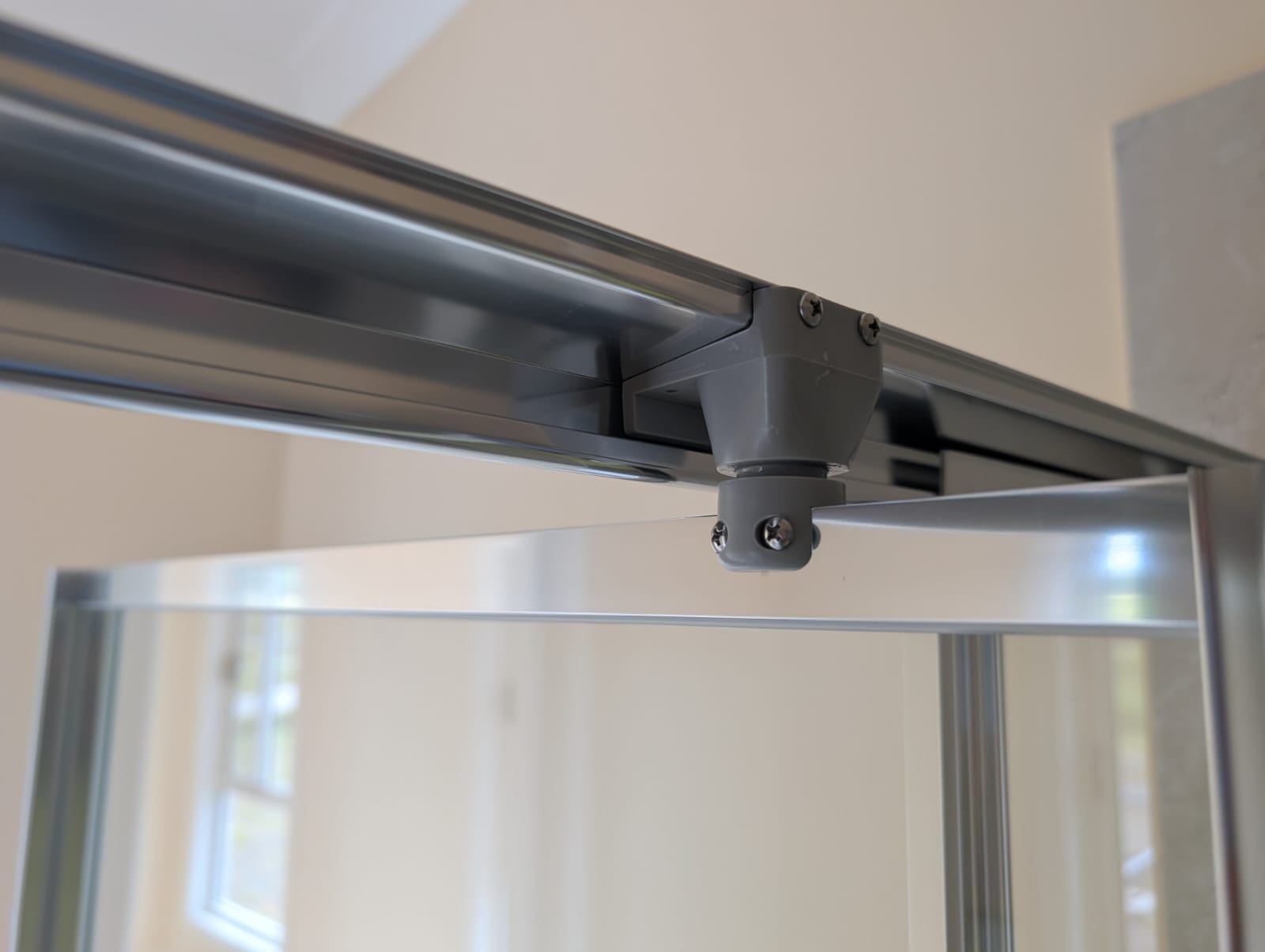
- A sliding door that drags or jumps the track. Nine times out of ten the rollers are worn, out of adjustment or clogged with soap residue. Rollers are a replaceable part.
- A pivot or hinged door that drops and catches on the base. Pivot pins and hinges wear, and the screws that hold them move over time. Both can be replaced or reset.
- A broken handle, knob or towel rail. Straightforward hardware swap, as long as the fixing holes in the glass are undamaged.
- Water escaping along the bottom or the side. Usually a perished water seal, a missing door sweep or silicone that has pulled away from the tiles.
- A wall channel that has come loose. Refixing and resealing the channel is a repair, not a rebuild.
Replacement hardware is not universal. Rollers, pivot sets and seals vary by manufacturer and by the age of the screen, which is why a photo of the fitting and the bottom track tells us far more than a description over the phone.
Problems that mean a new panel or a new screen
- Cracked or shattered glass. Toughened glass cannot be repaired or cut once it has been toughened. The panel is measured and made again.
- Etched or pitted glass. Years of hard water and cleaning products can leave the surface permanently cloudy. It cannot be polished out on a shower panel.
- A corroded or twisted frame. Once an aluminium frame has corroded at the base, new seals will not stop the leak for long.
- A screen that no longer suits the bathroom. If you are replacing tiles or a base anyway, a new screen made to the finished opening is the tidier result — see framed, semi-frameless and frameless styles.
Why shower glass sometimes breaks with nobody near it
Toughened glass is strong across its face and vulnerable at its edges and holes. A knock on an exposed edge during cleaning, a chip that has been there for years, or a hidden imperfection in the glass itself can all end in the panel letting go later, seemingly on its own. That is also why toughened glass is used: when it does break it falls into small blunt fragments rather than long shards. Glass we install in a shower meets AS/NZS 2208 and is glazed to AS 1288, the Australian standard for glass in buildings published by Standards Australia.
If your screen is old enough that you are not sure the glass is safety glass, a glazier can tell from the stamp in the corner of the panel. An unmarked panel in a bathroom is worth replacing on its own merits.
What a repair visit involves
- Send a photo of the whole screen and a close-up of the fitting that is giving trouble, with a rough width and height of the opening.
- We tell you whether it reads as a hardware, seal or glass problem, and what the likely fix is.
- We measure on site, free of charge, and give you a written quote — that quote is the price you pay.
- Parts are matched or, where the glass is being replaced, the panel is made at our Minchinbury workshop.
- We fit the parts or the panel, reseal what needs sealing, and take the old glass away.
Leave fresh silicone to cure before the first shower — 24 hours is the usual guidance on the cartridge.
Repair or replace: how to decide
A reasonable rule of thumb: if the glass and the frame are sound, repair. If the frame is corroded, the glass is etched, or two or three things are failing at once on a screen that is already twenty years old, the repair bill starts to approach a new screen that will not need attention again for a long time. We will tell you when we think a repair is not worth doing — and there is more on what drives the price of a new one in our guide to shower screen costs in Sydney.
If you are engaging any tradesperson for bathroom work, NSW Fair Trading sets out what you are entitled to expect, and the ACCC explains the consumer guarantees that apply to services and products. There is also general guidance for homeowners on the NSW Fair Trading site.
Common questions
Can you replace one panel and leave the rest?
Usually, yes. If the frame and the other panels are sound, a single panel can be measured and made to match. Where a screen is very old, the profile may no longer be made, and matching becomes the limiting factor rather than the glass.
Do you repair screens you did not install?
Yes. Most of the repair work we do is on screens fitted by someone else, often years ago.
My door drags on the base — is that the door or the floor?
Either. A door that has dropped can usually be reset or re-hung. If the base itself has moved or the fall is wrong, that is a tiling and waterproofing job, and we will say so rather than charge you for glass work that will not fix it.
Can I get a new screen without re-tiling?
In most cases, yes — a new screen is made to the opening you have. Where the old screen was silicone-fixed into the tiles, expect some silicone removal and touch-up along the line where it sat.
Get it looked at
We repair and replace shower screens across Blacktown, Parramatta, Penrith and Fairfield council areas, from our own workshop in Minchinbury. Send a photo and we will tell you what we think it is before anyone visits. More on the range of styles and how they are made on our shower screens page.
Get a free quote Call (02) 9832 1566
The workshop is open Monday to Friday, 7:30am to 4:00pm.