
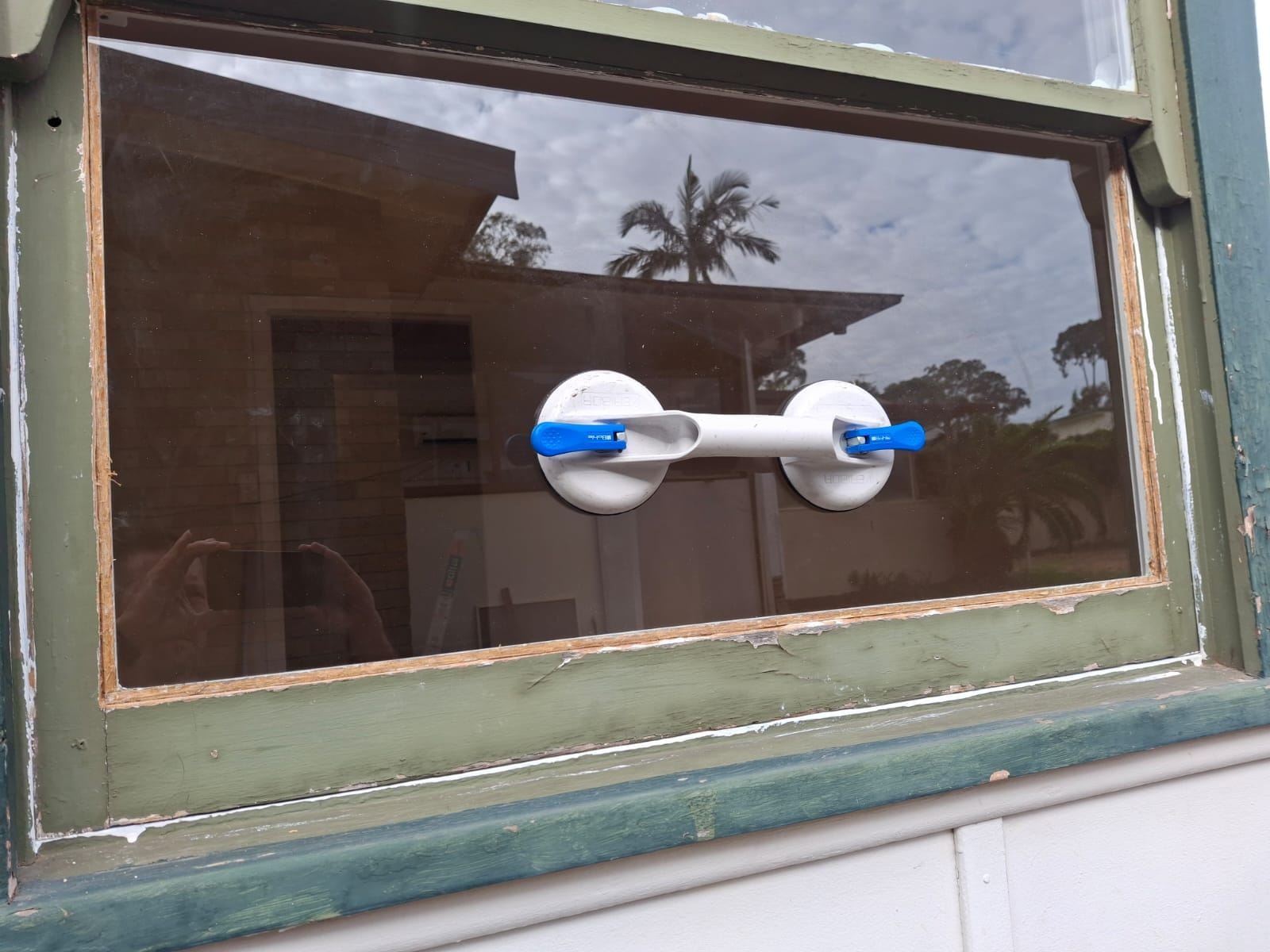
Glass replacement quotes: what to check
A quote is only useful if it names the glass, the work included and the work excluded — and two quotes only compare if both glaziers were given the same brief.
A glass replacement quote has to answer three questions before the number on it means anything: what glass is going in, what work is included, and what is not. Two quotes with different totals are often not pricing the same job — different glass, a different thickness, one with the old glass taken away and one without. Make them describe the same work, then compare.
Why a glazier cannot price your job over the phone
What a piece of replacement glass costs is driven by the size of the opening, the type and thickness of glass the location calls for, how the frame is built and what has to come out before the new glass goes in. A timber sash, an aluminium window with a bead gone brittle and a sliding door panel in a track are three different jobs at the same pane size, and access matters too. None of that is visible down a phone line, so a sight-unseen figure is a guess that gets corrected later. To see what moves the price before anyone visits, read our piece on replacing the glass in a window.
Write the brief before you ring anyone
NSW Fair Trading’s advice on getting quotes for contractors is to write a job brief however small the job, and to give at least three contractors the same information so the quotes can be compared. It also makes the point that matters most here: if you do not specify what you want at the start, a quote may only include the cheapest products and materials.
For a glass job the brief can be a few lines in an email:
- What the glass is in — a window, a door, a sliding door, a shower screen, a mirror, a splashback or a shopfront
- Which room it is in, and roughly how big the opening is
- Whether the glass is broken, cracked, or being replaced as part of a renovation
- Any finish you want named — the edge finish on a mirror, the frame colour on a shower screen
- Whether the opening needs to be made safe before the new glass is ready
- Anything affecting access — stairs, a locked gate, a tenant who has to be there
Send the same text to everyone. The moment one glazier quotes 6 mm toughened and another 4 mm float, the two prices stop telling you anything.
What a written quote should tell you
Fair Trading says a written quotation should include all the work to be done, list all materials to be used and reflect your specifications — and that you should check the materials quoted are what you asked for, not substitutes. On a glass job, that means naming:
- the glass type and its nominal thickness
- whether it is safety glazing, and the standard it meets
- removal and disposal of the old or broken glass
- any make-safe, either already done or still to come
- hardware — hinges, handles, channels, rollers — in or out of the price
- whether the price is supply only, or supplied and installed
- whose measurements the price is based on, yours or the glazier’s
The standards are worth knowing by name. AS 1288 is the Australian standard for selecting and installing glass in buildings, and it cites AS/NZS 2208 for safety glazing materials. We install safety glass meeting AS/NZS 2208 and glaze to AS 1288. Whether your opening needs safety glass depends on where it sits — we have covered how to work that out.
Comparing two quotes, step by step
- Line up the glass. Same type, same nominal thickness, same grade. If one quote does not say, ask before you compare.
- Line up the scope. Removal, disposal, make-safe, hardware, and putting fittings back.
- Separate supply only from supplied and installed. Different pieces of work; a price for one tells you nothing about the other.
- Check whether it is a quote or an estimate. An estimate is an opinion about likely cost; a quote is a fixed price for the described work.
- Ask what would change it. Get the answer in writing with the quote, not after the job starts.
Where a lower quote can end up costing more
A lower number usually has a reason, and sometimes it is a fine one. The reasons worth catching:
- The glass is wrong for the location. Doors, panels beside doors, low panels and bathroom glazing have requirements ordinary float glass does not meet, and glass that has to be replaced again is not a saving.
- Materials were substituted. Exactly what Fair Trading’s warning is about: a thinner pane or a different grade quotes lower every time.
- Disposal or make-safe was left out. Someone still has to take the broken glass away.
- A supply-only price was read as an installed price. The easiest mistake when quotes arrive in different formats.
Supply only, or supplied and installed
These are two different scopes, quoted differently. Supplied and installed means we measure the opening, make the glass in our Minchinbury workshop and fit it. Supply only means we cut glass or mirror to the size you give us, you collect it and you fit it — the measurements are yours, and so is the fit. It suits builders and anyone comfortable doing the glazing, and it is the wrong choice if the opening is awkward or the numbers are uncertain, because glass cut to a wrong size cannot be cut again. If that is the route, start with glass and mirror cut to size.
Your rights do not depend on what a quote promises
Whatever a quote says or leaves out, buying a service in Australia carries automatic consumer guarantees. The ACCC lists three for services: due care and skill, fitness for the particular purpose you asked about, and provision within a reasonable time. They are automatic, they sit apart from any extra promise a business chooses to make, and the ACCC is explicit that a business cannot remove them by what it says or writes. So you do not need a quote to spell out your basic rights — but a vague quote still protects nobody, including the person who wrote it.
Common questions
Is a measure and quote free?
Within our service area, yes. We measure, quote in writing, and the written quote is the price you pay. Our vans run across Western Sydney — Blacktown, Parramatta, St Marys, Penrith and Fairfield.
Can you quote from my own measurements?
For glass or mirror cut to size and collected from the workshop, yes — that is what supply only is. For installed work we measure ourselves, because a glass replacement that is a few millimetres out does not go in, and the frame has to be measured as it actually is.
Can the price change after the measure?
The written quote follows the measure, so it is the price for the work it describes. If you then change the scope — different glass, extra panels, hardware you had not mentioned — that is a new line, and it should be written down and agreed before anyone starts.
Get a measure and quote
All Purpose Glass is a family-owned glazier working from our own workshop in Minchinbury since 1992. We measure, make and install glass for windows, doors, sliding doors and shopfronts, we make shower screens, mirrors and mirrored wardrobe doors, and we cut glass and mirror to size for collection. The measure and quote are free within our service area, and the written quote is the price you pay.