
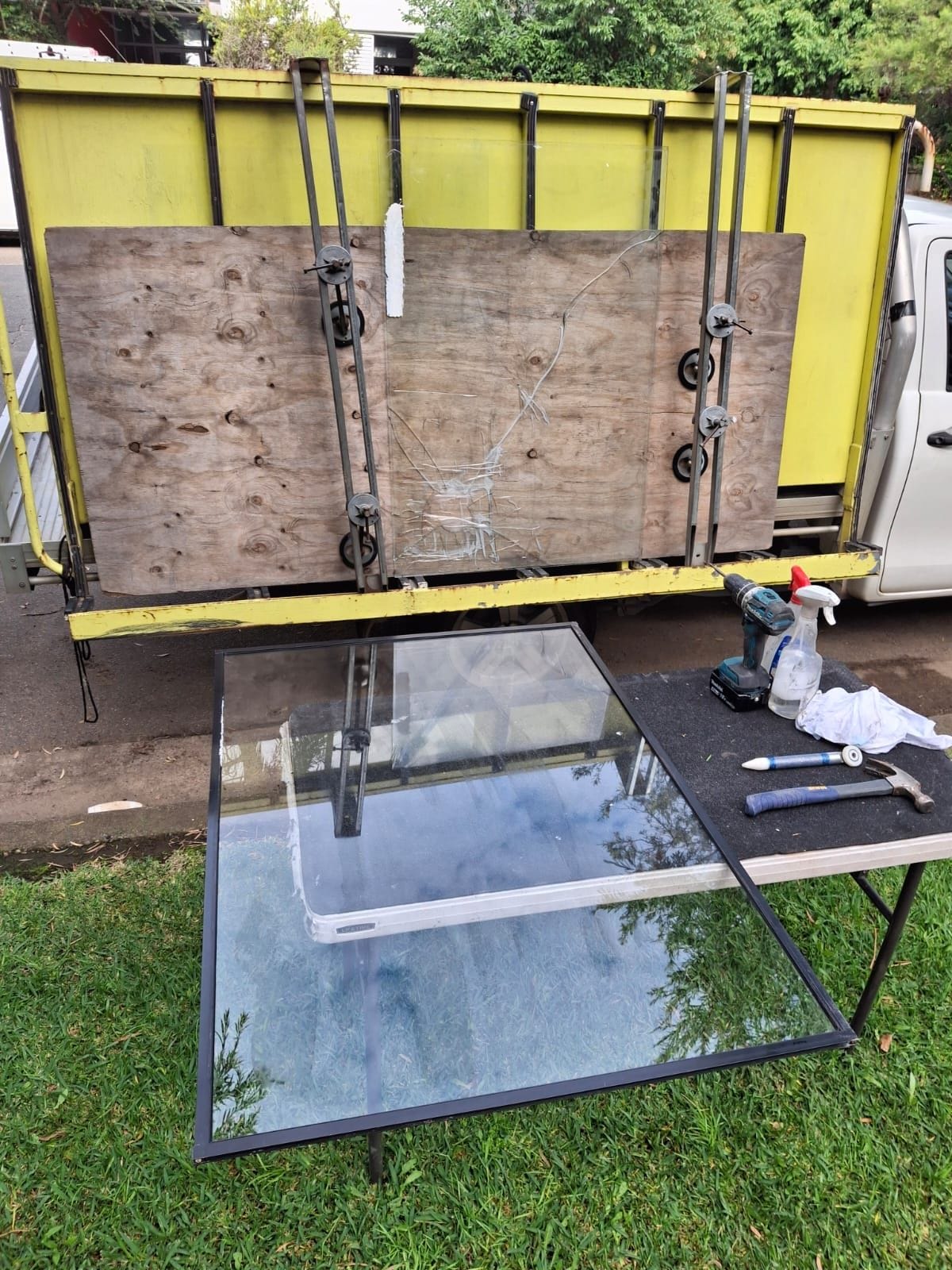
Shopfront glass replacement: what to do when a shop window breaks
How to make a broken shopfront safe, who usually pays, what glass goes back in, and what drives the cost.
When a shopfront window or glass door breaks, the order is simple: keep people away from it, secure the opening, record what happened, then get the glass measured and replaced with the right type of safety glass. Before you book anything, check your lease and your business insurance, because either can decide who pays and who has to be called.
First: make the shopfront safe
Broken glass in a shopfront is a hazard for staff, customers and anyone walking past. Toughened glass usually breaks into small pieces that can keep falling out of the frame. Laminated glass cracks but tends to stay in one sheet. Older annealed (ordinary) glass breaks into long, sharp shards.
- Clear the area. Keep customers and staff away from the glass, inside and out. If the footpath is affected, block it off with bins, chairs or signage.
- Don’t pull loose pieces out by hand. Leave glass that is still in the frame where it is unless it is about to fall. If you have to handle it, wear heavy gloves and closed shoes.
- Tape a cracked pane that is still in place, in a criss-cross pattern, to help hold it together.
- Secure the opening. A shop can’t be left open overnight, so the gap needs boarding or covering until the new glass goes in.
- Photograph everything before it is cleaned up: a wide shot of the shopfront, close-ups of the break and the frame, and whatever caused it.
- Report a break-in or vandalism to police and keep the event number. Insurers commonly ask for it.
Our guide on what to do when a window breaks covers the safety side in more detail. Our workshop is open Monday to Friday, 7:30am to 4:00pm. We are not an after-hours service, so if the glass breaks at night or on a weekend, make the opening secure yourself and call us when we open.
Who pays: landlord, tenant or insurer?
For a shop, this usually comes down to two documents: the lease and the business insurance policy.
- The lease. Retail and commercial leases often make the tenant responsible for repairs, including glass. The NSW Small Business Commissioner’s retail tenancy guide notes that the lessee is often responsible for repairs and maintenance, and that commercial leases can be very different from residential ones. Some leases say the landlord or strata arranges shopfront glass, so read the repairs clause before you book.
- Business insurance. Many business policies offer glass cover, either as standard or as an optional section. Whether yours does, what excess applies, and whether you must use a particular repairer all depend on the policy. Check it, or call your insurer.
- The property manager or strata. In a strip of shops or a centre, the shopfront frame and glass may be managed centrally. A quick call to the managing agent avoids two glaziers turning up.
If you are claiming, your insurer will usually want photos and an itemised quote. Our article on claiming a broken window on insurance explains what to collect.
What glass goes back into a shopfront?
Shopfronts are large panes at ground level, next to a footpath, often with a glass door beside them. That is exactly where people walk into glass or push against it. The Australian Standard for glass in buildings, AS 1288, sets requirements for human impact safety in areas where people may come into contact with glass, as well as for glass strength and wind loads.
In practice that usually means one of two safety glasses:
- Toughened glass — heat-treated so it is several times stronger than ordinary glass, and breaks into small granules rather than shards. Common in glass doors and frameless shopfronts.
- Laminated glass — two sheets bonded to an interlayer. When it cracks it stays in the frame, so the shop stays closed up. That is why it is popular where security matters.
The right thickness and type depend on the size of the pane, how it is framed, how close it is to the floor and whether it is part of a door. Older shopfronts sometimes have ordinary annealed glass that would not be used for a replacement today. A glazier can confirm what the standard requires for your shopfront. We install safety glass that meets AS/NZS 2208 and glaze to AS 1288.
How shopfront glass replacement works
- Secure the opening so the shop is safe and lockable while the new glass is made.
- Measure the opening and check the frame, beads and seals. A damaged frame or door closer is worth finding now, not after the glass is cut.
- Agree the glass type — toughened or laminated, clear or with privacy film or frosting — and get a written quote.
- Make the glass. Laminated glass can be cut to size. Toughened glass has to be cut and processed before it is toughened, because it can’t be cut afterwards.
- Fit the new pane. The old glass comes out, the new pane goes in and it is re-sealed.
We measure, make and install from our own workshop in Minchinbury. See glass replacement in Western Sydney for windows, doors and shopfronts, and sliding door glass replacement if the broken panel is a sliding door.
What drives the cost
No two shopfronts are the same, so we don’t publish prices. The main factors are:
- the size of the pane, since large shopfront sheets need more glass and more hands to fit
- toughened versus laminated glass, and the thickness required
- whether the frame, beads or door hardware also need work
- access, such as upper-level glazing or a busy footpath
- whether the opening had to be boarded first
We give a written quote after a free measure, and the written quote is the price you pay.
Common questions
Can I stay open with a cracked shopfront window?
If the crack is small and the glass is laminated and stable, it may be possible, but keep people clear of it and get it looked at soon. Cracked toughened glass can fail without warning, so keep that area closed off until it is replaced.
Is shopfront glass the landlord’s or the tenant’s responsibility?
It depends on the lease. Many commercial leases put repairs on the tenant, but some leave the shopfront with the landlord or strata. Check the repairs clause, and ask the managing agent if it isn’t clear.
Should I replace it with toughened or laminated glass?
Both are safety glass. Laminated holds together when broken, which helps with security. Toughened is stronger and is common in doors and frameless glazing. What your opening needs depends on its size and position, and a glazier can confirm what the standard requires.
Do you work on shopfronts outside Minchinbury?
Yes. We cover the Blacktown, Parramatta, Penrith and Fairfield council areas, including Blacktown, with a free measure and quote within our service area.
Get your shopfront glass replaced
Send us photos of the damage and the size of the opening, or call the workshop. We will measure it, recommend the right safety glass and give you a written quote.