
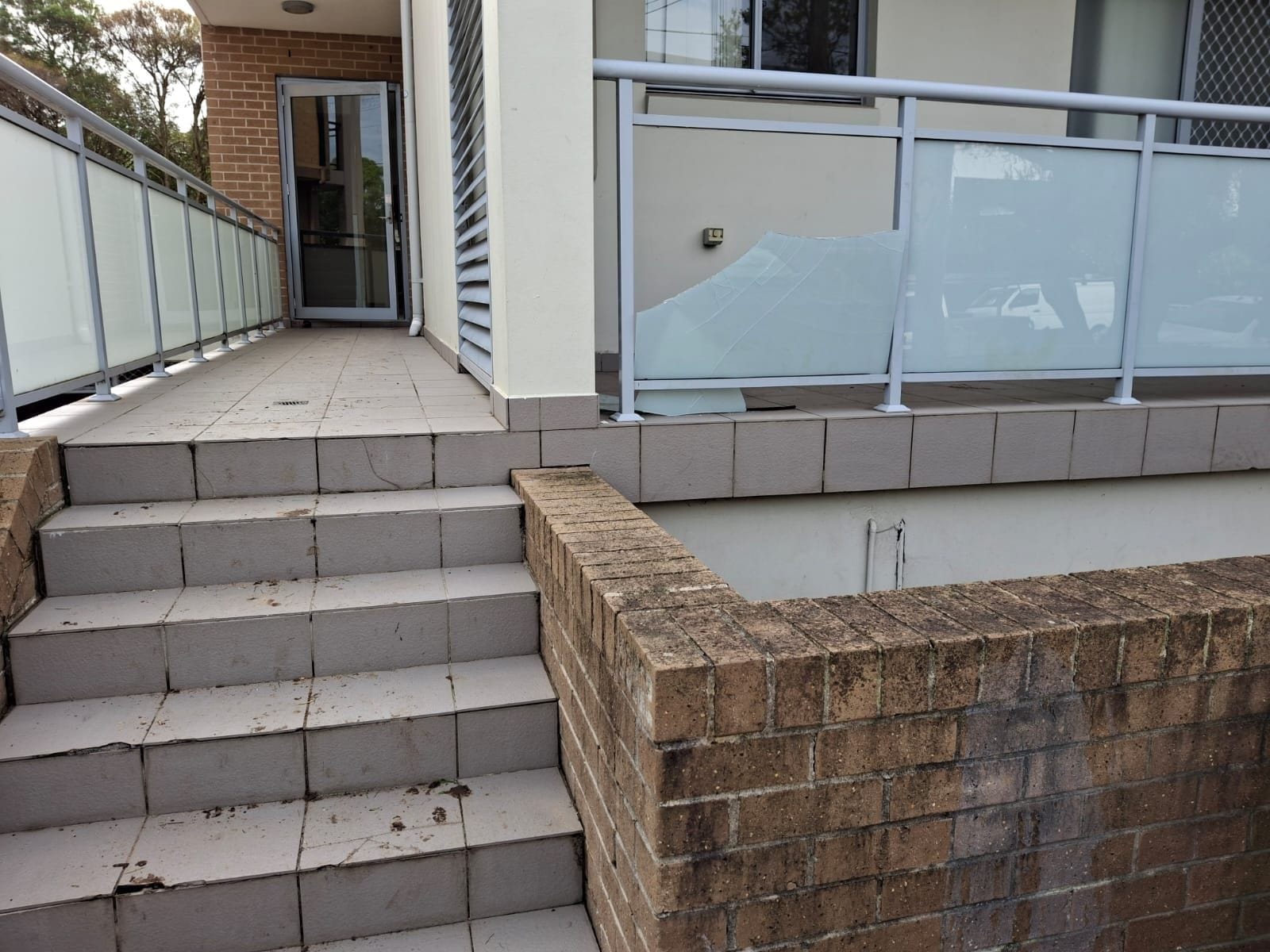
Who pays for broken glass: landlord, tenant or insurer?
In a rented home the landlord usually pays, unless the tenant or a visitor broke it; in a leased shop the lease decides; insurance can cover either side once the damage is worth more than the excess.
Broken glass in a property someone else lives in or trades from comes down to three questions: who broke it, what the agreement says, and whether it is worth claiming. In a rented home the landlord has to keep the place in reasonable repair, so glass that fails on its own or is broken by weather or a passer-by is normally theirs; damage the tenant or their visitors caused is the tenant’s. In a retail or commercial lease there is no general rule — the lease decides. Insurance can pick up either side, once the loss is bigger than the excess.
Rented homes: the landlord’s side
Under the NSW rules on rental property maintenance responsibilities, the landlord must provide and maintain the property in reasonable repair. What counts as reasonable takes account of the age of the premises, the rent charged and how much useful life the building has left.
That puts most broken glass on the landlord’s side by default. A pane that cracks as the building moves, a window broken in a storm, a panel broken by someone with nothing to do with the tenancy — none of that is tenant damage. For a property manager the job is to get the opening made safe, the replacement quoted in writing, and the paperwork on the file.
When the tenant pays
The same rules say a tenant must not damage or permit damage to the property, and is responsible for the cost of repairing damage they have caused or allowed, including damage by anyone they have let onto the premises. A landlord is not required to fix damage a tenant caused. A ball through a window from inside, a door slammed hard enough to take out the side panel, a mirror knocked off a wardrobe — those sit with the tenant.
There is a limit on that, and it works in the tenant’s favour: a landlord seeking the cost has to try to limit it. In practice that means a sensible quote for like-for-like glass, not the dearest option on the market, and not a new frame when the pane is what broke.
Is a broken window an urgent repair?
Not automatically. The list of urgent repairs in residential rental properties names gas leaks, electrical faults, flooding, storm or fire damage, loss of water, gas or electricity, broken toilets and serious roof leaks — broken glass is not on it. What the list does include is any fault or damage that makes the property unsafe or insecure, and that is usually where a smashed window belongs: a ground-floor opening anyone could step through, or a hole open to the weather. A chip or hairline crack in a pane that is still holding is a different thing, and goes through as an ordinary repair request. Either way, tell the landlord or agent straight away, in writing.
Shops and commercial premises: read the lease
Retail and commercial leases do not work the way residential tenancies do. There is no standard split of repair obligations in the law — the NSW Small Business Commissioner’s retail and commercial leasing factsheet sends you back to your own lease, and that is genuinely where the answer lives. Many leases make the tenant responsible for shopfront glass specifically.
Two points from that factsheet are useful. Under section 36 of the Retail Leases Act 1994 a retail tenant has a right to a reduction in rent and outgoings for the period the shop cannot be used because of damage, in proportion to the part that cannot be used. And tenants are generally expected to insure their own property inside the premises, so stock and fit-out damaged by falling glass is usually a matter for the tenant’s policy. If the shopfront itself has gone, our guide to shopfront glass replacement covers that job.
When insurance is worth bringing in
Often it is not. A single broken pane can cost less than a typical excess, and claiming then achieves nothing but a mark on the policy. A full shopfront, a stacked sliding door or several panes at once is a different calculation, and worth a call to the insurer first.
If you do claim, the General Insurance Code of Practice sets out the timing to expect from a subscribing insurer: within ten business days of getting your claim they should tell you what they need and estimate how long a decision will take, then decide within ten business days of having it, and within four months of the claim regardless. Cover varies a great deal between policies, so check your wording before assuming glass is included. Our post on making a broken window insurance claim goes through it in more detail.
What to do in the first hour
- Keep people and pets clear — the pieces left in the frame are the dangerous ones.
- Photograph it before anything is touched. Both sides, one wide shot and a few close ups — this is what settles arguments later, and what an insurer asks for first.
- Tell the other party in writing — a short dated email with the photos attached.
- Report a break-in or vandalism to the police; insurers generally want the report details.
- Get the opening made safe so the building is secure until the new glass is in.
- Get the replacement quoted in writing, with pane size and glass type on it.
Common questions
Can a tenant arrange the repair and take it off the rent?
Not off the rent — NSW Fair Trading is explicit that you should not stop paying rent, because withholding it can put you in breach of the agreement. There is a separate path for urgent repairs: if you cannot reach the landlord or agent you can arrange a repairer and seek reimbursement of up to $1,000, which must be repaid within 14 days of your notice. Non-urgent work needs their written consent and agreement to pay first. The steps are on Fair Trading’s page on getting repairs done.
Who pays when the glass broke on its own?
Toughened glass can fail with no impact at all, usually from damage to an edge or corner months earlier. Nobody caused it, so in a rented home it normally falls on the landlord as an ordinary repair. On the insurance side it depends on the wording — some policies treat spontaneous breakage as accidental damage and some do not — so check your policy or ask your insurer.
Does the replacement glass have to be safety glass?
Often yes, and it does not matter what was in the frame before. Glass in a door, beside a door, low down in a wall or anywhere in a bathroom is expected to be safety glass when it is replaced — we have written that up in does my window need safety glass. We install safety glass that meets AS/NZS 2208 and glaze to AS 1288, and a glazier can confirm what the standard requires for your window.
Need glass replaced or an opening made safe?
All Purpose Glass is a family-owned glazier working from our own workshop in Minchinbury since 1992. We make the opening safe and install replacement glass across Western Sydney, including Parramatta and the rest of the Blacktown, Parramatta, Penrith and Fairfield areas. The measure and quote are free within our service area, and the written quote is the price you pay — which is what an owner, a tenant or an insurer needs to see.